幸運に
きっと皆さんも一度は目にしたことがあるでしょう——片手を挙げてこちらを招く、あの小さな猫の置物。そう、「招き猫」です。古くから縁起物として親しまれてきたこの招き猫ですが、その背後には、意外と知られていない歴史や、さまざまな伝説、そして日本の民芸との深いつながりがあるのをご存知でしょうか?この微笑む猫は、どのようにして私たちの暮らしに根付き、そして何を「招いて」いるのでしょうか。
You’ve probably seen it before: a small cat with one paw raised, slowly beckoning from behind the window of a shop. It’s called maneki neko (招き猫, literally “the beckoning cat”) and, while it may seem like just a cute figurine, it holds a surprising amount of history, symbolism, and charm. But where did this ever-smiling cat come from, and what is it really beckoning?
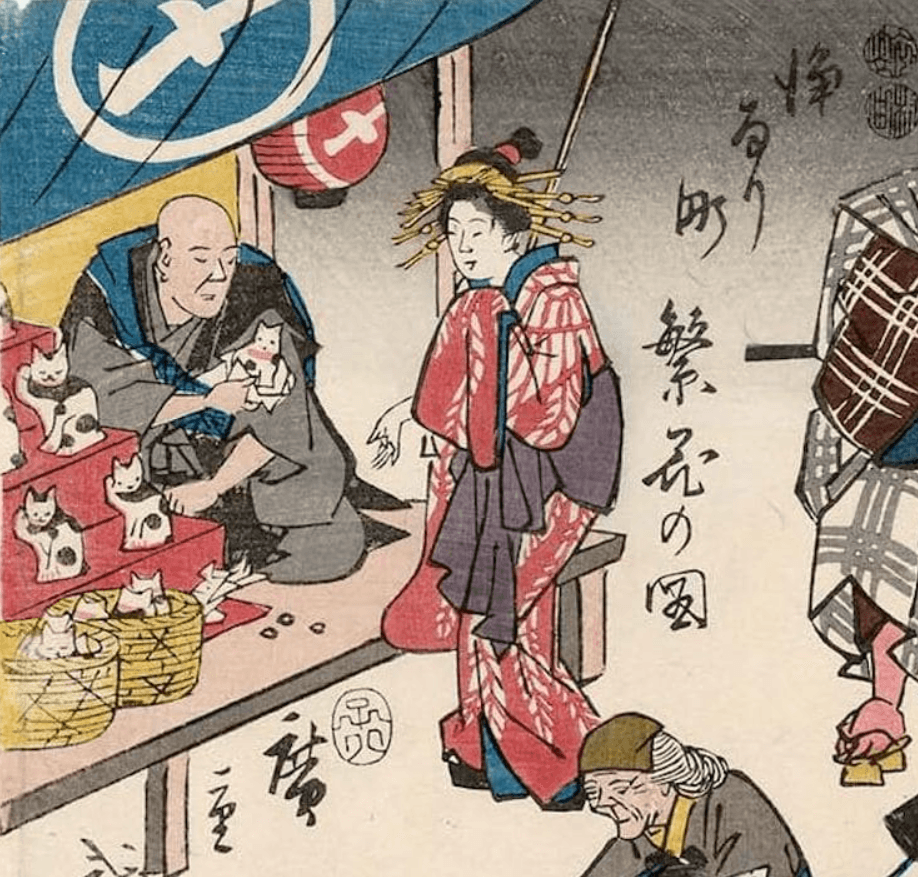
歌川広重の浮世絵木版画シリーズ「繁盛する団子町」(1852年)からの詳細。 Detail from Utagawa Hiroshige‘s ukiyo-e style woodblock print from the series, “Flourishing Business in Balladtown,” 1852. (Photo: Wikimedia Commons, Public domain)
起源と伝説
Origins & Legends
招き猫の誕生には、いくつかの興味深い説があります。
よく知られているのが、江戸時代の豪徳寺にまつわる話。ある日、武士が寺の前を通りかかると、一匹の猫が手招きをしていました。不思議に思って近づくと、背後に雷が落ち、命拾いをしたのだとか。それを機に、その武士は豪徳寺の支援者となったと伝えられています。
また、浅草の商人が、野良猫を保護したところ、その猫が客を呼び込むようになり、商売繁盛に繋がったという話も。さらに、貧しい女性が飼っていた猫を手放した夜、夢にその猫が現れ「自分の姿を土人形にして売りなさい」と告げられたという伝説もあります。言われた通りにしたところ、たちまち人形が評判となり、彼女は困窮から抜け出したと言われています。
明治時代になると、職人たちが本格的に招き猫を作り始め、民芸品としての地位も確立されていきました。
There isn’t just one origin story behind the maneki neko, there are many. One popular legend tells of a samurai who, while passing Gotoku-ji Temple near Edo, noticed a cat raising its paw. As he stepped toward it, lightning struck the spot where he’d been standing. Grateful for the warning, he became a patron of the temple. Another story speaks of a merchant who took in a stray cat; in return, the cat beckoned customers into his shop, bringing prosperity.
The custom of keeping maneki neko figurines grew popular in 19th-century Asakusa. One tale tells of a poor woman who, after giving up her cat, dreamed it asked her to make its image in clay. She sold the figures outside a shrine, and soon found herself lifted from poverty.
Artisans began mass-producing them in the late 19th and early 20th centuries, especially after the Meiji Restoration.
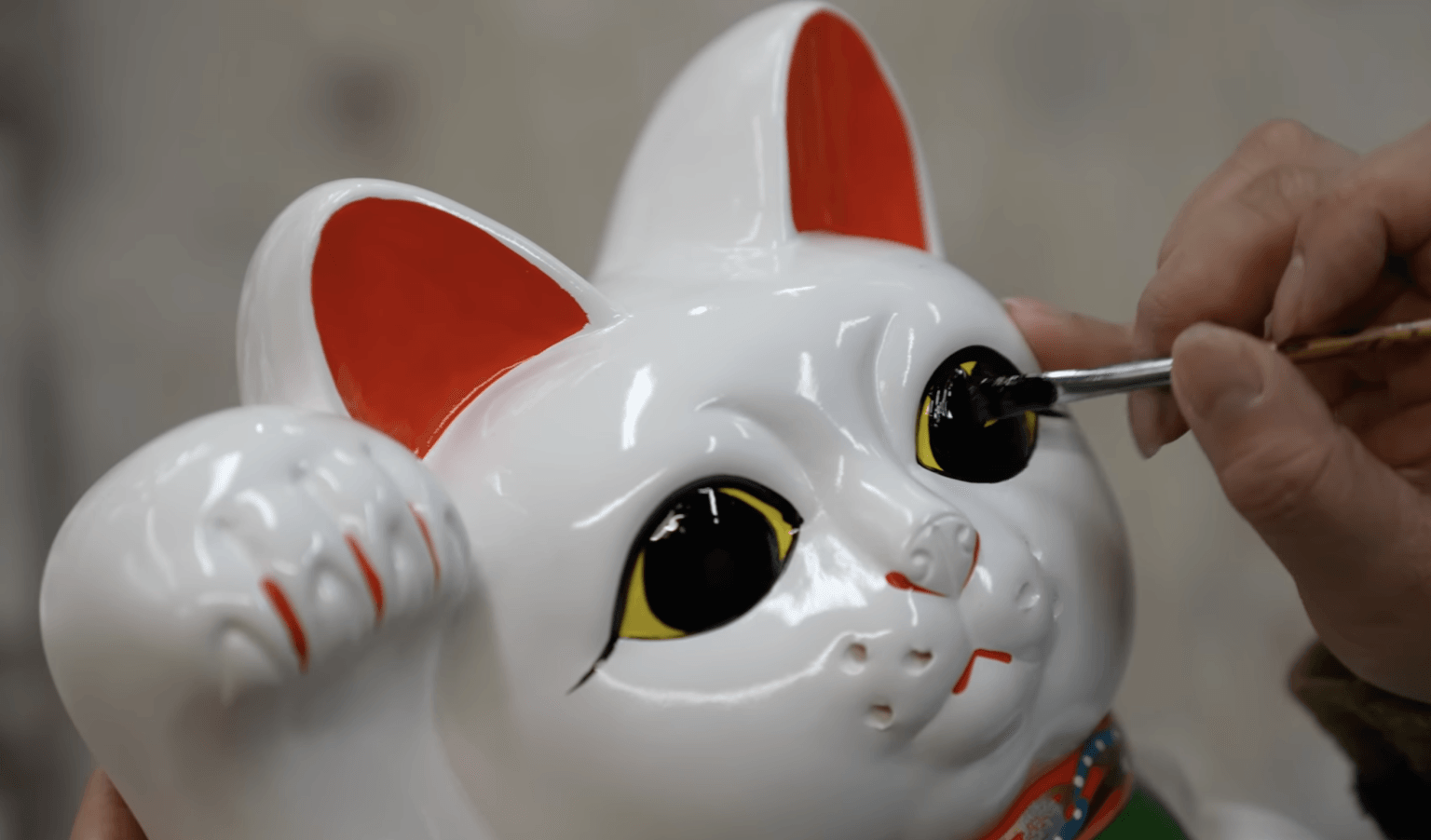
招き猫の人形の目を丁寧に描く職人。Craftsman carefully painting the eyes of a Maneki Neko figurine.
縁起物からアートの手仕事へ
Craft and fortune: From Lucky Charm to Work of Art
招き猫は、単なる縁起物にとどまらず、日本の民芸(民間工芸)のひとつとして、地域の職人による手作業で丁寧に作られてきました。陶器に絵付けされたその一体一体が、小さな芸術作品とも言える存在です。
時代が進むにつれ、招き猫は浮世絵や現代のポップアート、ファッション、デザインにも登場し、その姿も意味も進化し続けています。
江戸の庶民信仰から生まれたこの猫は、今では日本のアートとクラフト文化の象徴的存在として、国内外で愛されています。
Beyond their symbolism, maneki neko are part of Japan’s folk art tradition (mingei), often handcrafted by local artisans using traditional techniques in ceramics and painting. Each figure is not only a charm, but also a miniature work of art.
Over time, the maneki neko has evolved from traditional ceramic figures to a beloved icon seen in everything from ukiyo-e prints to contemporary pop art, streetwear, and graphic design.
From its humble beginnings in Edo-era folktales, the maneki neko has become not just a good-luck charm, but an enduring figure in Japanese folk art. Traditionally made in ceramic and hand-painted with care, these cats are crafted with the same attention to detail found in other mingei (folk crafts) of Japan.
Their presence has also made its way into classic ukiyo-e prints and modern illustration, evolving in both style and meaning across centuries of Japanese art.
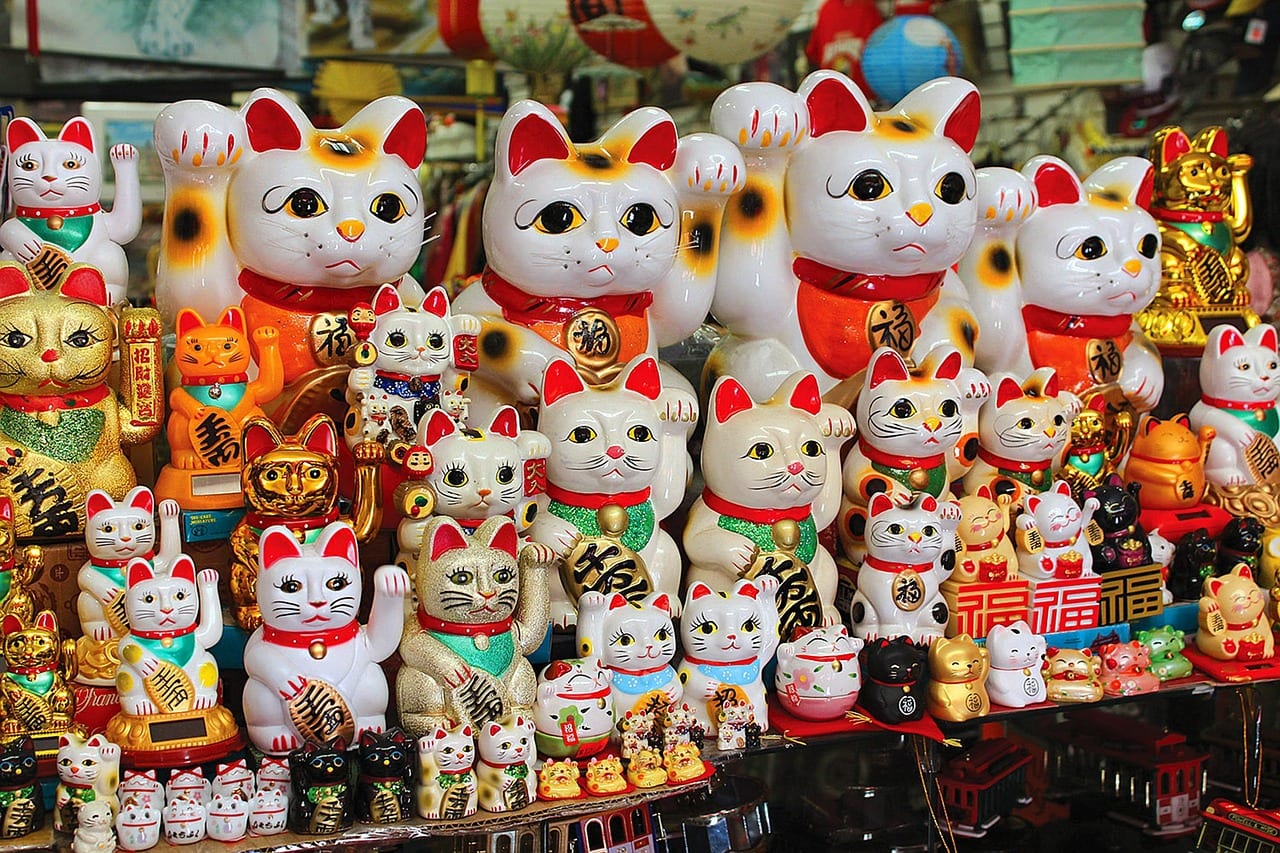
さまざまな色やサイズ、デザインの招き猫の置物が伝統的な日本の幸運の猫の多様性を示しています。 Maneki Neko figurines in diverse colors, sizes, and designs, showcasing the variety of the traditional Japanese lucky cat statues. Photo by Emanuel Golabiewski from Pixabay.
招いているのは…何?
What Is the Maneki Neko Beckoning?
招き猫の「手を挙げたポーズ」、実はあいさつではありません。
「いらっしゃいませ」と、運や人を呼び込むしぐさなのです。
・左手を挙げている猫:お客さんや人との縁を呼び込む
・右手を挙げている猫:金運や健康を招く
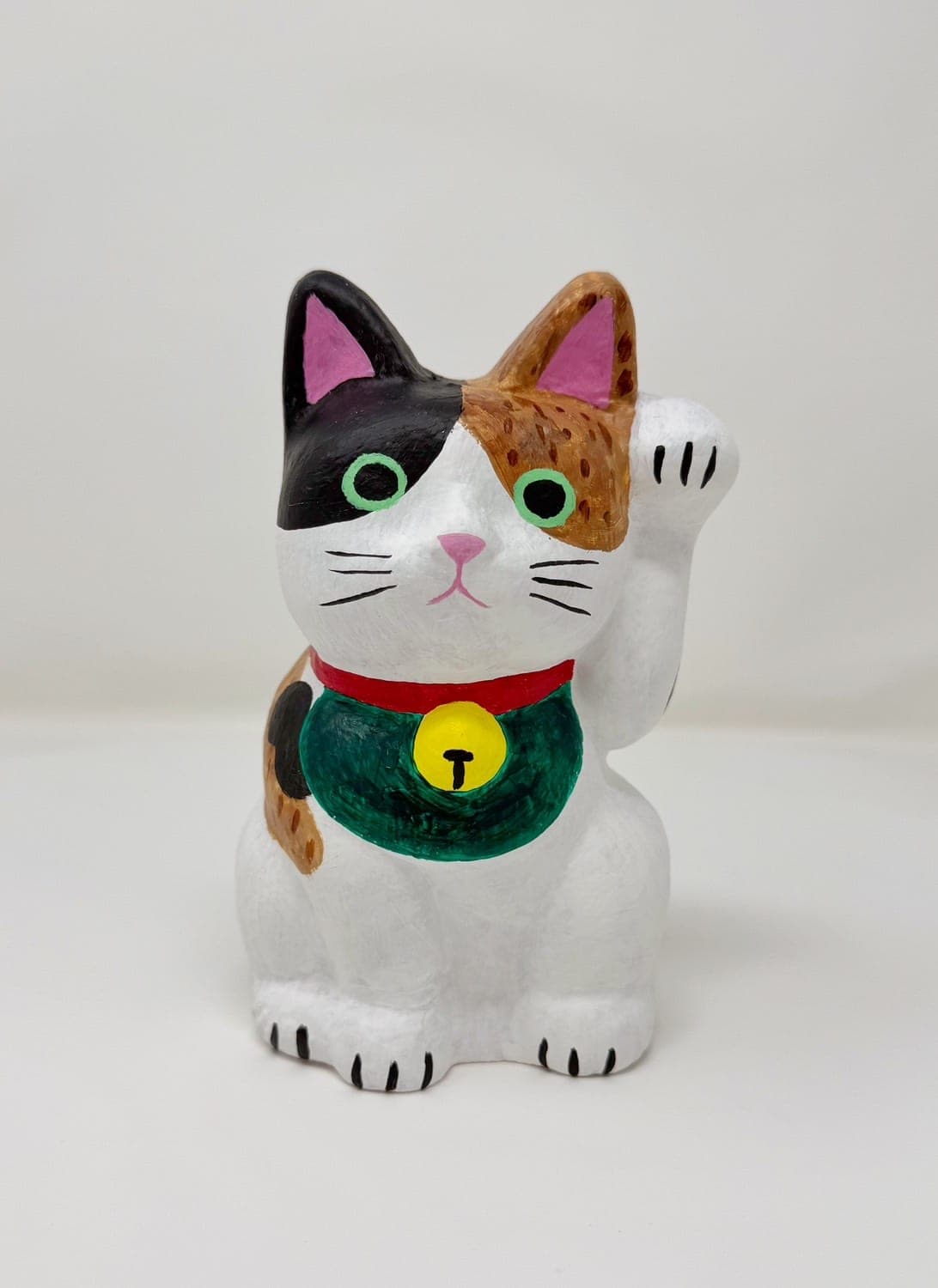
また、赤い前掛けを着け、首には鈴のついた首輪、手には「千万両(せんまんりょう)」と書かれた小判を持っていることが多く、それぞれに意味があります。
色によっても願い事はさまざま:
白 全体的な運気上昇
黒 魔除け・厄除け
赤 病気除け
金 金運・繁栄
緑 学業成就
青 安全と成長
紫 夢の実現
ピンク 恋愛運
The raised paw isn’t a greeting: it’s a gesture of invitation! A left paw raised is said to bring customers and connections; a right paw draws in wealth and good health.
Many maneki neko also wear a red bib, a bell collar, and clutch a gold coin known as a koban, often inscribed with 千万両 (senman ryō), symbolizing immense wealth. Even the color of the cat matters:
- White: general good luck
- Black: protection from evil spirits
- Red: warding off illness
- Gold: wealth and prosperity
- Green: academic success
- Blue: safety and personal growth
- Purple: making dreams come true
- Pink: love and romance
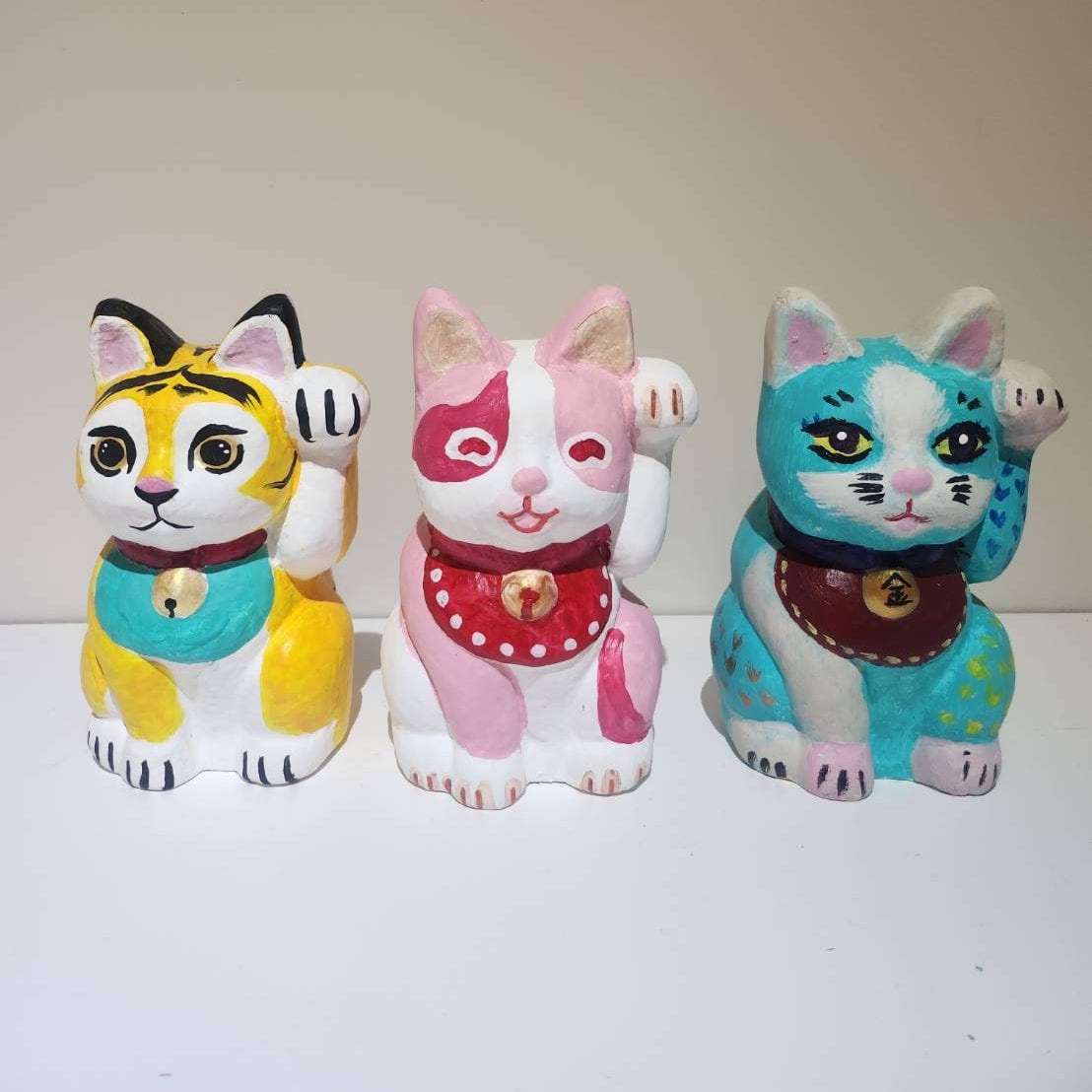
色や柄がそれぞれ違う、個性豊かな三体の招き猫。Three unique Maneki Neko figurines, each customized with different colors and patterns.
幸運は自分で作るもの
Make Your Own Luck
「幸運は引き寄せられる」とよく言われます。
ならば、その“招き”を、自分だけの招き猫の彩りで表現してみませんか?
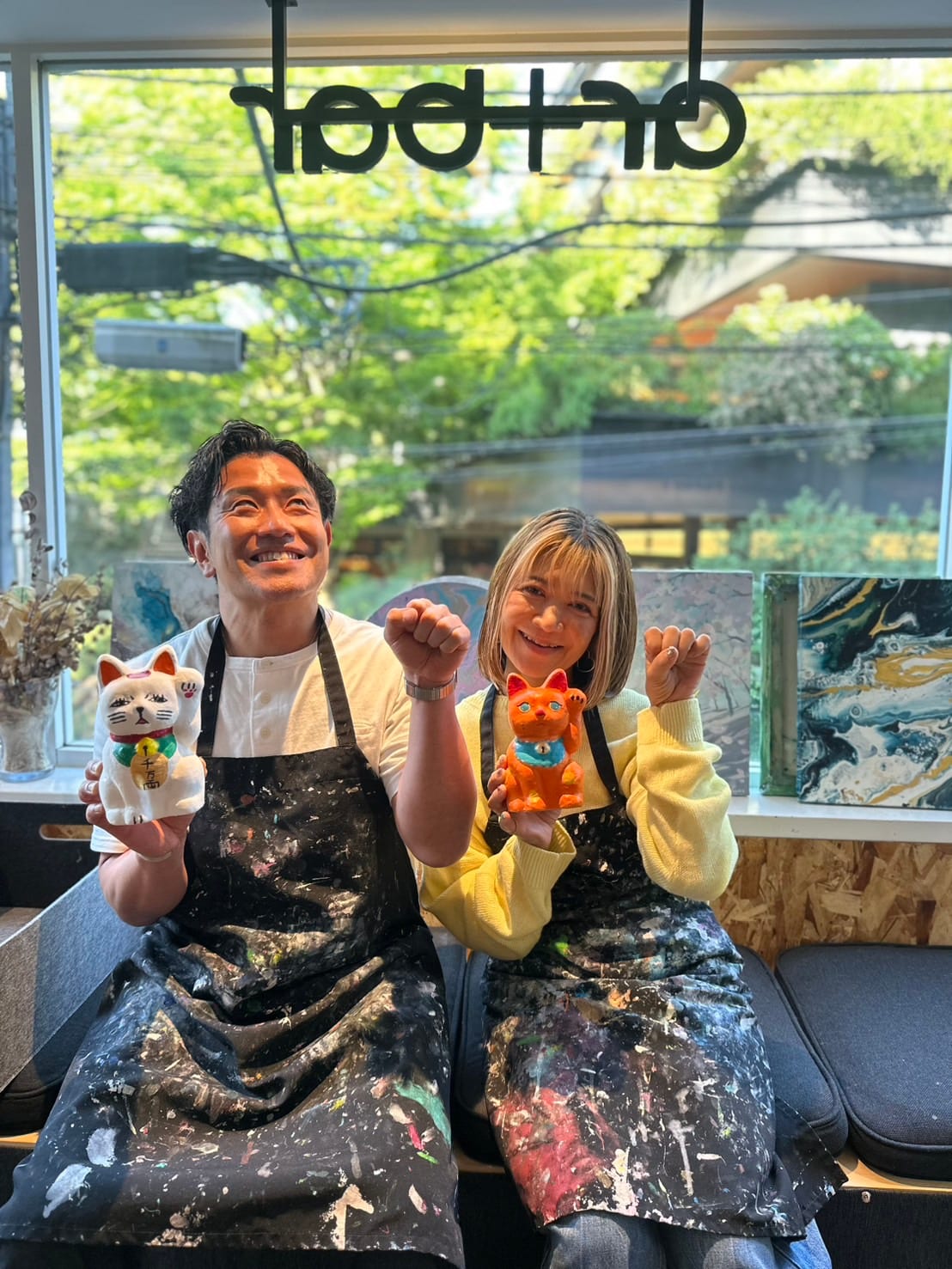
Artbar Tokyo では、白い素焼きの招き猫をキャンバスに、色やモチーフ、込めたい願いを選んでペイントする体験ができます!形は決まっているからこそ、色彩やデザインで自分らしさを映し出し、世界に一つだけの招き猫を完成させる楽しみがあります。
幸運は待つものではニャーく、自らつかみ取るもの。
さあ、「運を手作りする」体験をはじめてみませんか?
In Japan, they say that fortune comes to those who are ready to receive it and sometimes, that means creating a little luck with your own two hands.
At Artbar Tokyo, you can design and decorate your very own maneki neko, choosing its color, style, and the kind of fortune you’d like to invite into your life. Whether you’re seeking abundance, protection, or just a cute companion with meaning, your lucky cat will be as unique as you are.
Because sometimes, the best luck is the kind you craft yourself!