Art in bloom: クリス・パイレートが
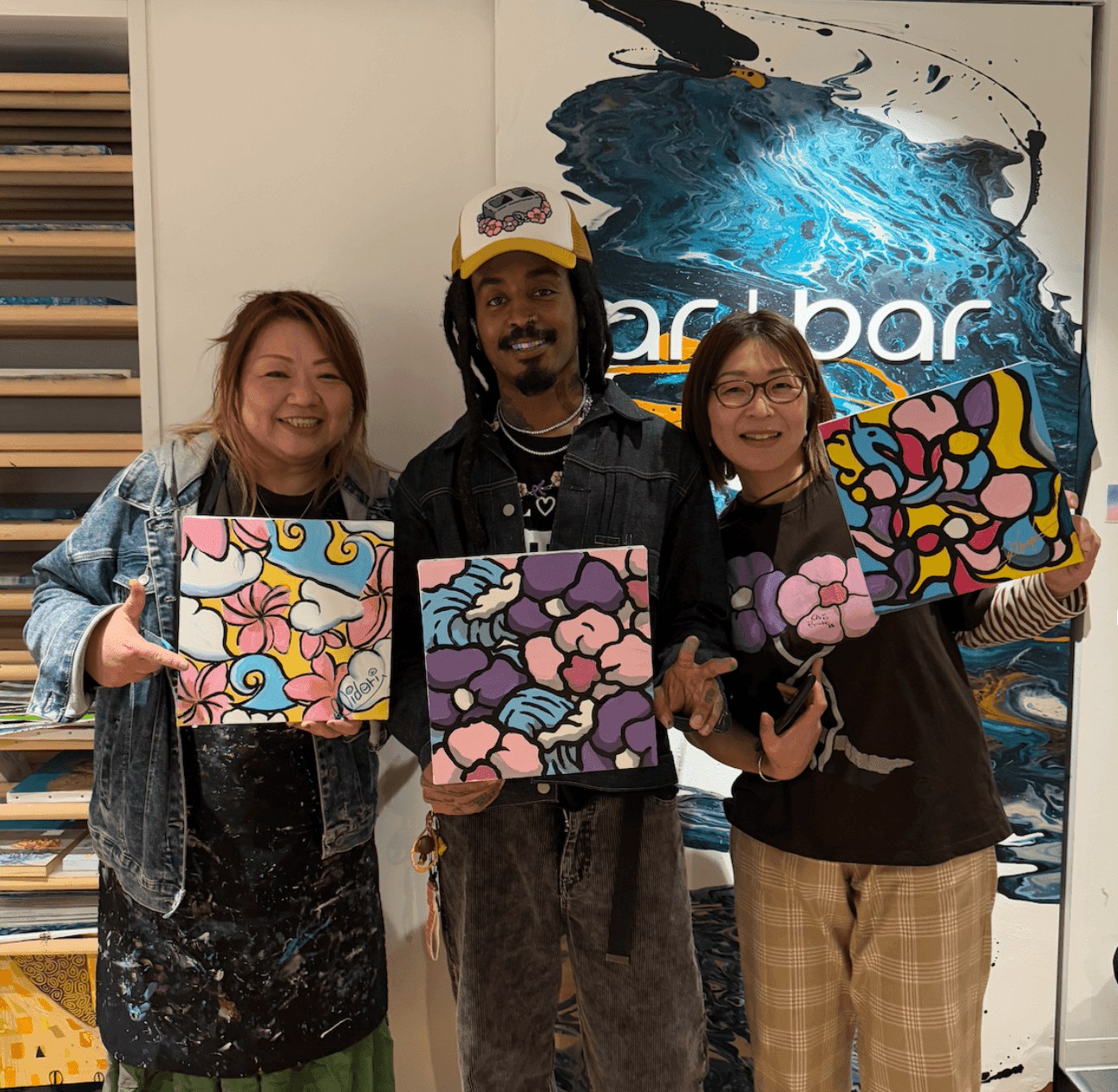
Artbar Tokyoでは、multi-disciplinary artistクリス・パイレート(Chris Pyrate)をゲストインストラクチャーとしてお迎えしました。彼の作品に共通するのは、見る人を惹きつける独創的なパターンと、世界各地を旅する中で培われた感性。アメリカ・ワシントンD.C.から東京へ——その土地ごとに異なる文化や色彩に触れながら、彼は独自のスタイルを築いてきました。今回のインタビューでは、彼の創作の原点や日本とのつながり、そしてArtbar Tokyoでの貴重な体験について深く掘り下げていきます
自己紹介と、アーティストとしての歩みについて教えてください。
壁画アーティストとして活動しつつ、デザインやストーリーテリングも手がけています。出身はアメリカ・ワシントンD.C.で、その後はニューヨーク、マイアミ、カリフォルニア、ロサンゼルスなど、いろいろな街で暮らしてきました。最近は東京にも長く滞在しています。
僕の作品は、そうした土地ごとの出会いや出来事がそのまま色濃く反映されているんです。それぞれの街が持つ「空気感」や「色彩」、日常の風景が、ひとつひとつインスピレーションになって、今の作風ができあがってきたと思います。
創作スタイルはどのように進化してきたのでしょうか?影響を受けたものがあれば教えてください。
最初の大きな影響は、桜でした。ですが、旅を重ねる中でいろんなものがインスピレーション源になっていきました。例えばマイアミでは、強烈な日差しの影響で、建物のペイントがすぐに色褪せてしまう。その環境から、パステルカラーに興味を持つようになったんです。
その後、コスタリカでは植物の緻密な美しさに惹かれて、「自然とテクノロジーの融合」のような植物の描き方を模索するようになりました。
柔らかい色合いと、しっかりとした輪郭線。そのバランス感覚が、今の自分のスタイルを形作っていると思います。
桜のモチーフは、あなたの代表的なモチーフのひとつですね。個人的なつながりがあると伺いました。
そうなんです。僕が育ったワシントンD.C.では、もともと日本から贈られた桜の木がたくさん植えられていて、春になると町中がピンクに染まるんですよ。
子どもの頃は、正直、花粉症がひどくて「またこの季節か〜!」なんて思ってたくらい(笑)。でも大人になるにつれて、その美しさにどんどん惹かれていって。高校時代に日本の筆ペンを使い始めたのがきっかけで、「あれ、この花って日本の桜なんだ!」と知って。そこから一気に日本文化に興味が湧いてきました。
桜の花って、はかなさや再生の象徴でもありますよね。そういった意味も含めて、自分の作品に取り入れるようになったんです。
日本文化への関心はどこから始まったのでしょうか?アートへの影響についても教えてください。
最初は完全にポップカルチャーからですね。90年代に『ドラゴンボールZ』がアメリカで流行りはじめて、僕も夢中になりました。当時、いとこがアニメやゲームに詳しくて、まだアメリカで一般的じゃなかった頃からいろいろ教えてくれて。そこから自然と、日本の文化やファッション、アートにも興味が広がっていきました。
その流れで、桜のモチーフを取り入れた作品が注目されて、NBAの「ワシントン・ウィザーズ」とのコラボが実現しました。そのユニフォームデザインが日本にも紹介されたことで、「あ、自分の作品って日本とちゃんとつながってるんだ」って実感したんです。初めて東京に来たときも、「やっと来られたな」という気持ちと同時に、不思議とすごく自然に馴染めた感覚がありました。
今回、Artbar Tokyoでのワークショップに参加いただきましたが、教えることに関しては初めての経験でしたか?
実は、以前D.C.のユース団体で一度だけ教えたことがあって、そのときもすごく良い経験でした。僕がアートを通して伝えたいのは、「あなたの好きなことには、それだけで表現する価値がある」ということ。猫が好きでも、車が好きでも、それをアートに落とし込むことで、ちゃんと自分らしい作品になるんです。
Artbar Tokyoでは、「自分の好きなものからパターンを作る」というテーマで教えました。僕の真似をするんじゃなくて、自分だけの表現を見つけてほしかった。
アートって、ただ「見るもの」じゃなくて、自分の中にある思いを「伝えるためのツール」だと思っています。
最後に
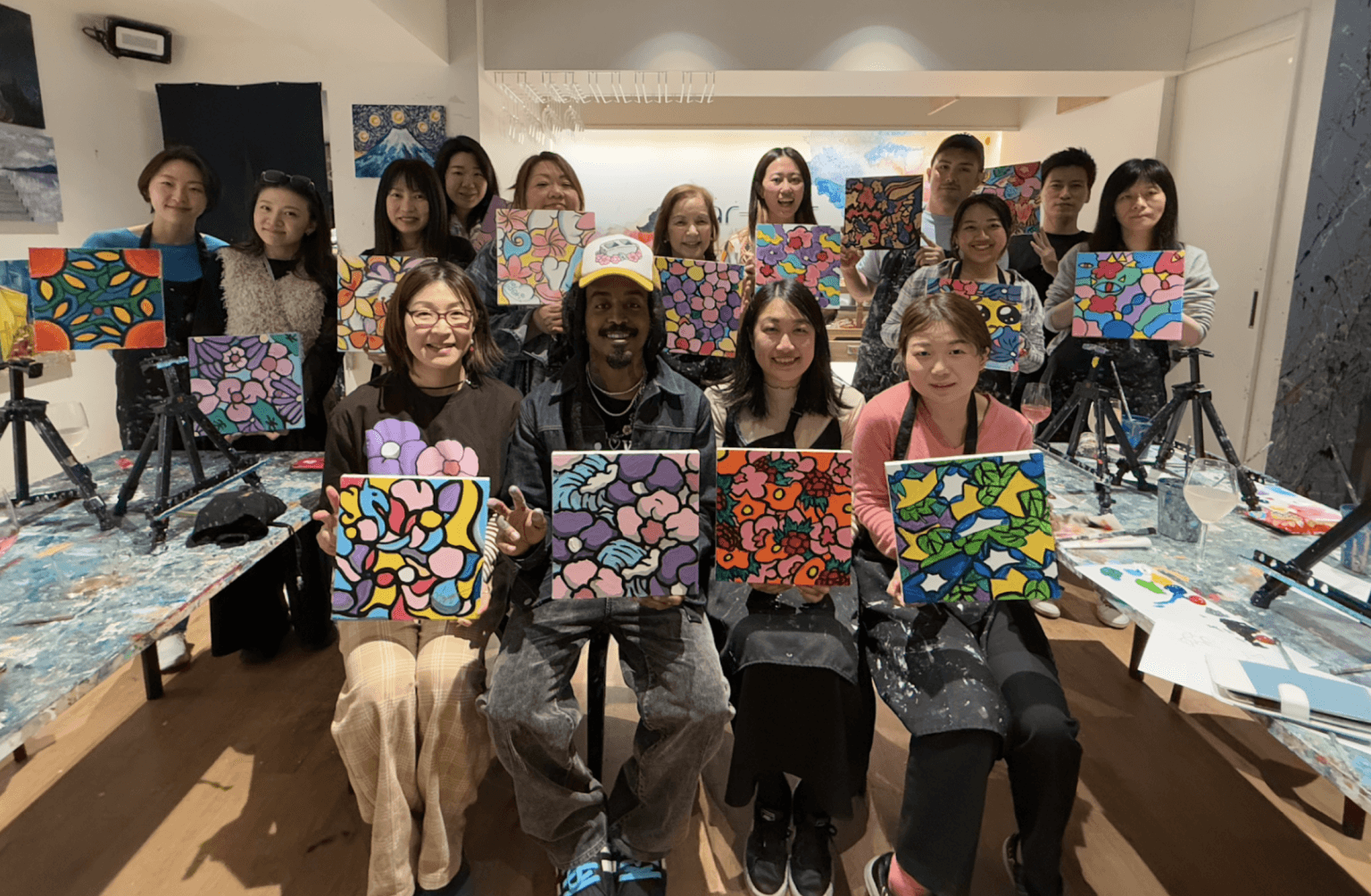
今回のワークショップは、Artbar Tokyoにとっても特別な時間でした。クリスさんのクラスは、創造力と楽しさにあふれていて、まさに私たちが目指す「アートのある時間」を体現してくれました。
今後も彼のアートがどのように進化し、世界中の人々にインスピレーションを与えていくのか、とても楽しみです。ご参加いただいた皆さま、ありがとうございました!
これからも魅力的なクラスやイベントを開催していきますので、どうぞお楽しみに。
Art in bloom: A Creative Journey / Interview with Chris Pyrate
At Artbar Tokyo, we had the pleasure of hosting the multi-disciplinary artist Chris Pyrate as a guest art instructor. Known for his stunning patterns and captivating designs, Chris’s journey as an artist has taken him all around the world, from Washington D.C. to Tokyo. With a style influenced by the places he’s lived and the cultures he’s encountered, Chris’s work tells a story of personal growth, exploration, and creativity. We sat down with him to dive deeper into his artistic evolution, his connection to Japanese culture, and his recent experience at Artbar Tokyo.
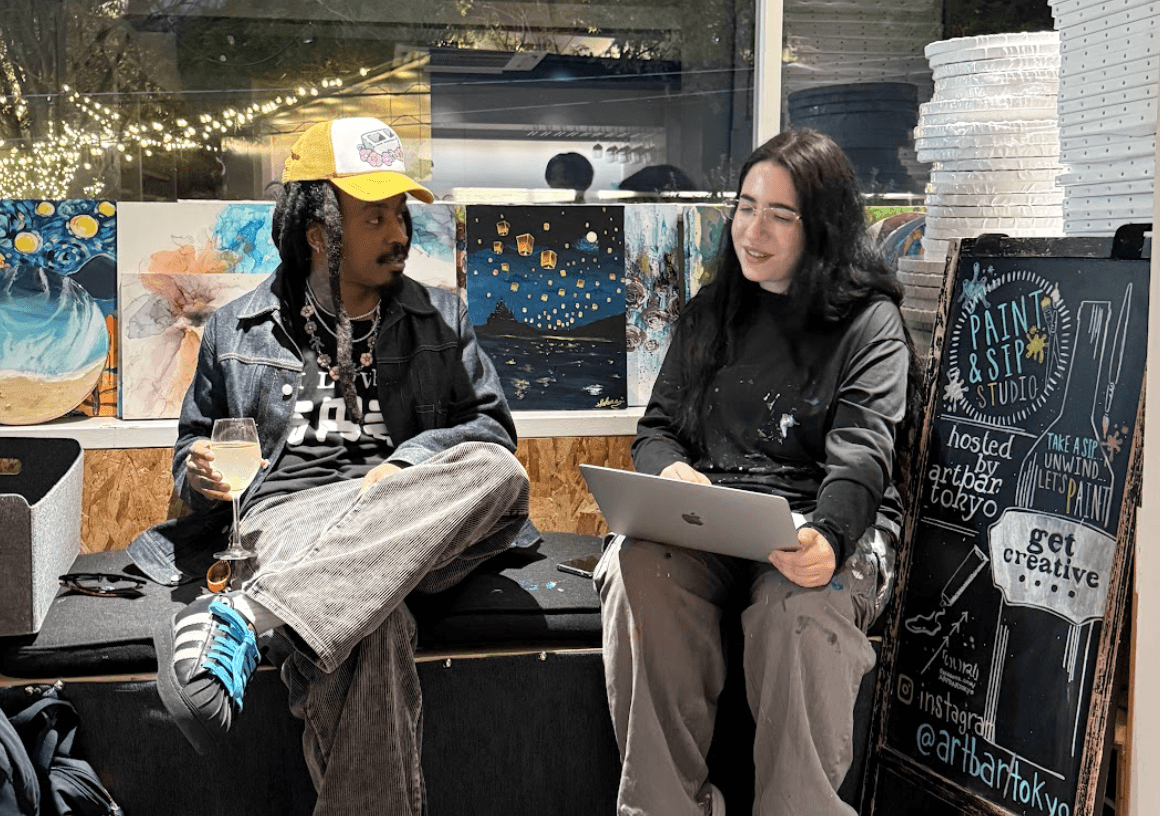
Can you tell us a little about yourself and your journey as an artist?
I’m Chris Pyrate, a muralist, designer, and storyteller. I grew up in D.C., and I’ve lived in a lot of places like New York, Miami, California, and Los Angeles. Now, I’m spending more time in Tokyo. My art has always been influenced by these places. It’s a collection of moments and inspiration I’ve gathered from my travels. Every place I’ve lived and worked has had a different influence on my art, and I think that’s reflected in the diversity of my style.
How has your art evolved over time, and what other influences have shaped your work?
My work has evolved through a mix of different influences. The cherry blossom was my first big influence, but as I traveled, I started incorporating other elements. When I moved to Miami, I noticed how the pastel colors there were influenced by the sun – paint fades quickly due to the intensity of the sunlight. That led me to explore pastel tones in my work. Later, when I spent time in Costa Rica, I was inspired by the intricate details of the plants. I started drawing plants with such detail that they looked like a cross between nature and technology. I wanted to find a balance between soft colors and bold lines, which has become a hallmark of my current style.
You mentioned the cherry blossoms, which you often incorporate into your work. Can you tell us about the personal connection you have to this motif and how it influences your art?
I grew up in D.C., where the cherry blossoms were gifted by the Japanese government in the early 1900s. As a kid, I didn’t appreciate the trees much, especially during allergy season when the pollen would be so thick it was like snow! But over time, I began to appreciate their beauty. I didn’t realize it was a Japanese tree until later, when I started using Japanese brush pens in high school. That’s when I learned about the Sakura flower, and it really connected with me. Eventually, I incorporated it into my artwork, especially after working on murals and seeing the flower’s symbolic significance.
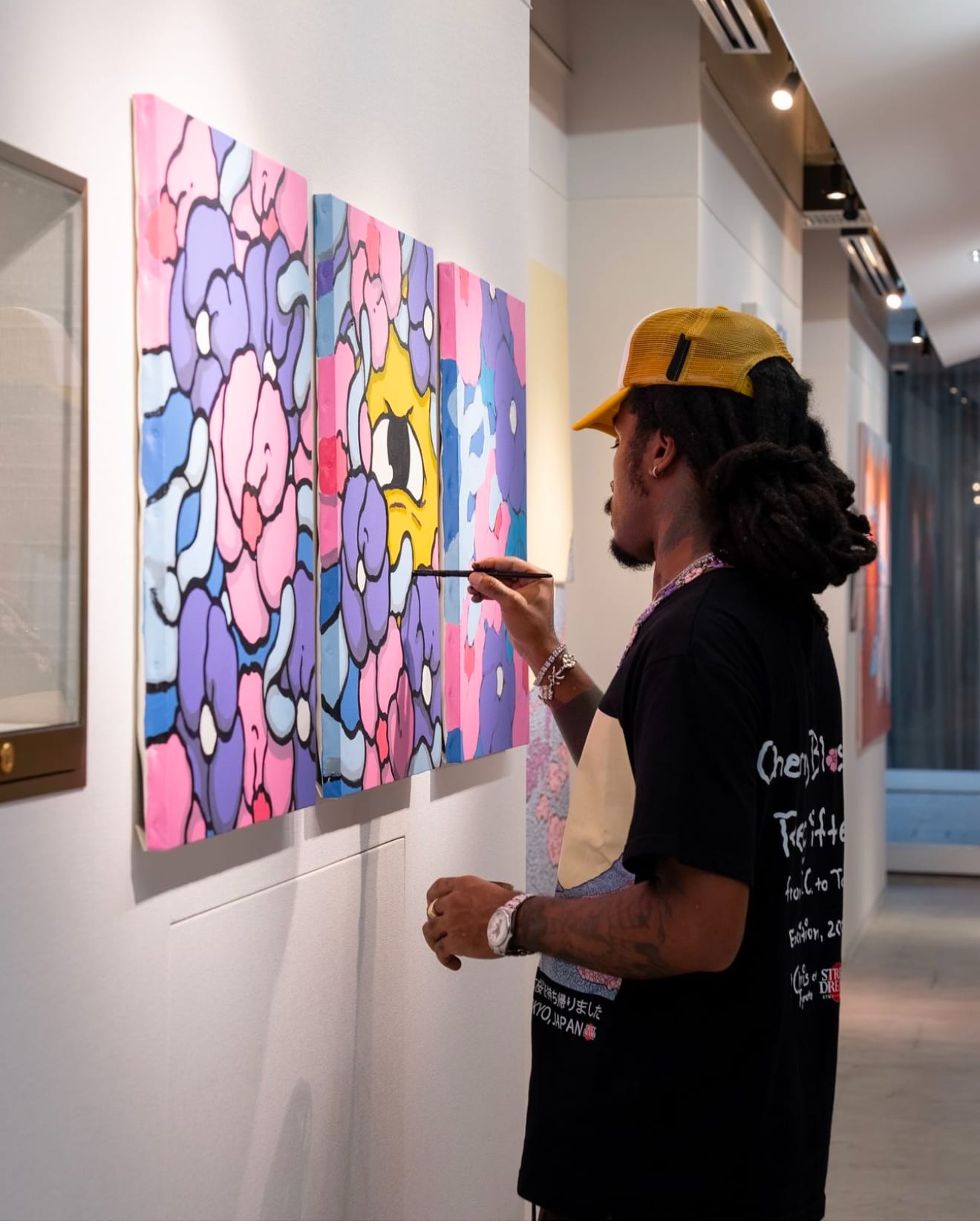
Not only is the Sakura one of your signature motifs, but it is also a well-known symbol of Japanese culture. Speaking about it, what led to your interest in Japan, and how did this connection influence your art?
It all started with pop culture, specifically anime like Dragon Ball Z. In the 90s, anime was just starting to make its way to the U.S. I was really into it, and my cousin was a big influence, always showing me things before they hit mainstream. It sparked an interest in Japanese culture for me, and over time, I saw how anime and fashion intersected. This connection continued through the art scene: when my cherry blossom motif gained popularity, I was invited to collaborate on designs for the Washington Wizards’ jersey. The NBA even took my work to Japan, and that was when I realized how much my art was connected to Japan. Eventually, I came here, and it felt like everything just fell into place.
Among the various creative projects you have ongoing in Japan, you collaborated with Artbar Tokyo as a guest art instructor. Was this your first time teaching? What do you want to convey to your students as an art-instructor?
I’ve taught once before, in D.C., for a youth organization. It was a rewarding experience. As an instructor, my goal is to show people that their interests and memories have artistic value. I want them to understand that their passions (whether it’s cats, cars, or something else) can be transformed into meaningful artwork. For Artbar Tokyo, my goal was teaching how to create patterns based on things they love. It’s not about copying my work, it’s about creating something unique that represents them. Art, for me, is about communication. It’s not just for your eyes; it’s a way to express what’s inside and share it with others.
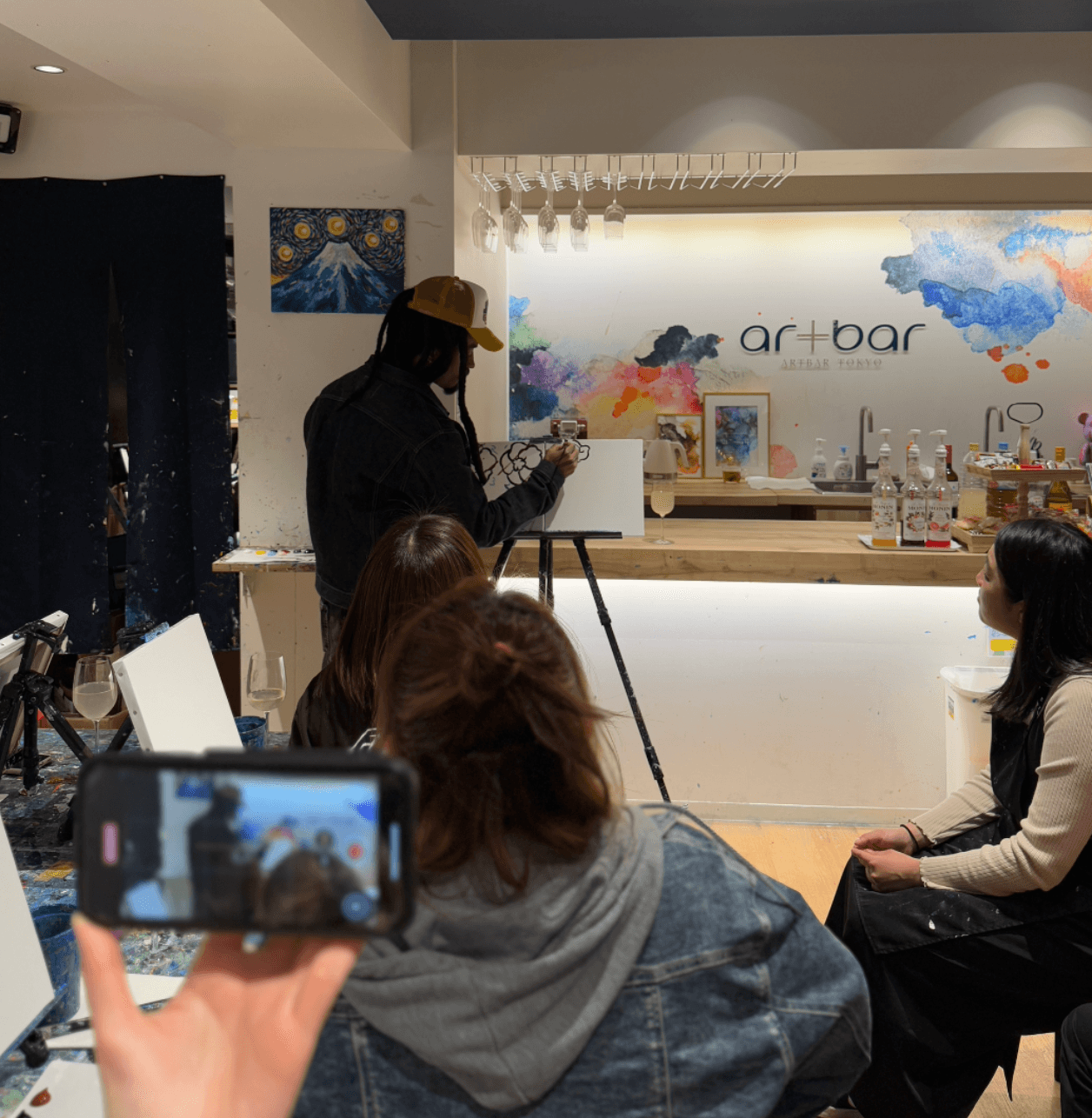
Chris Pyrate’s special event at Artbar Tokyo was a huge success, and we’re grateful to have had the opportunity to host such an inspiring artist. His class was a wonderful blend of creativity and fun, perfectly capturing the spirit of what we strive to create here at Artbar Tokyo. We wish Chris Pyrate the best for his artistic journey around the world, and we’re looking forward to seeing how his work continues to evolve and inspire. Thanks to everyone who participated in this special event and continues to choose us. Stay tuned for more exciting classes and special events!