ハロウィンの
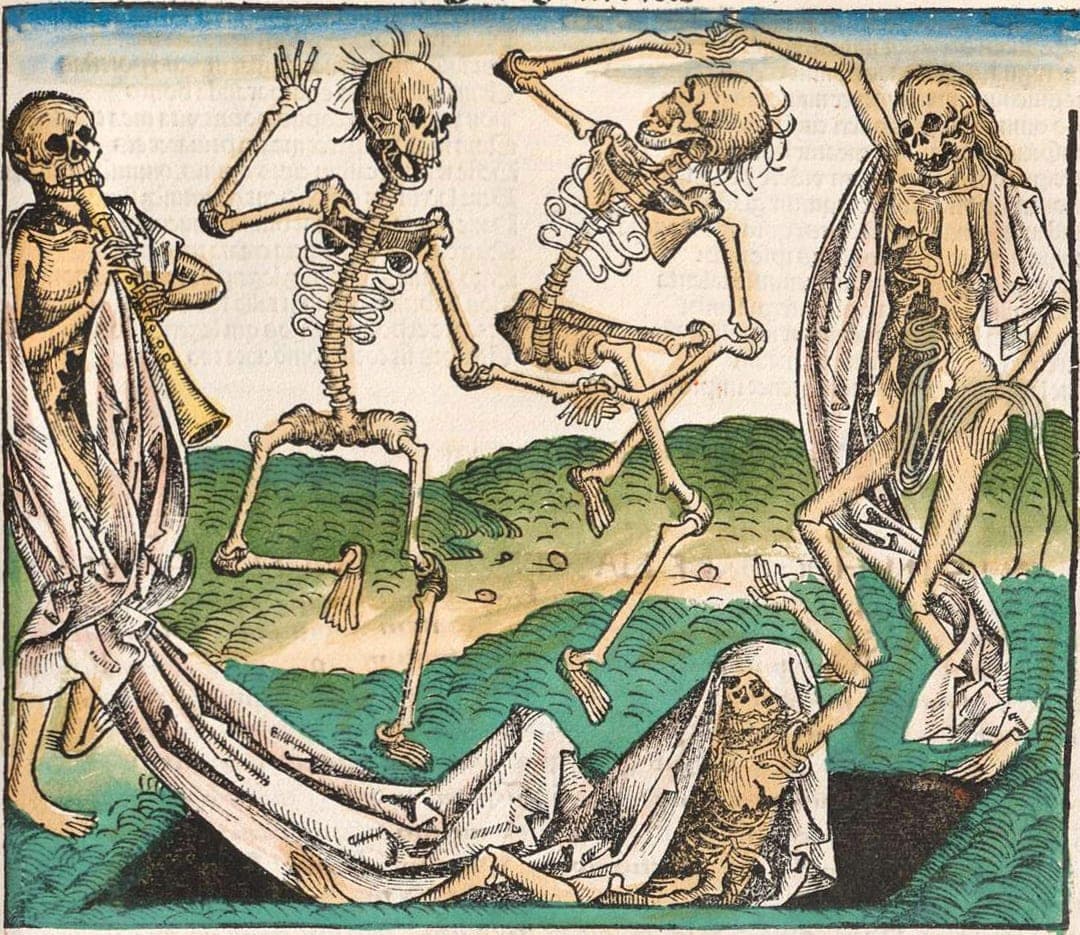
Cover image: Danse Macabre, Michael Wolgemut, 1493, woodcut, dimensions vary, from the Nuremberg Chronicle
ハロウィンは世界中でよく知られた人気のあるお祭りですが、その起源や歴史、アートの中でどんな表現をされてきたか、考えたことはありますか?
Halloween is a well-known and popular holiday worldwide, but have you ever wondered about its origins and how it has been represented in art across different cultures and historical periods?
ハロウィンの起源は非常に古く、宗教的な基盤を持っており、サウィン祭(Samhain)というケルトの祝祭に遡ります。この祭りは収穫を迎え、先祖を敬うことに捧げられています。9世紀頃、キリスト教がアイルランドやスコットランドに広がると、この異教の祭りはキリスト教の祝いに再構成されました。この影響により、「オールハロウズイブ(All Hallows’ Eve)」という名前に変更され、最終的には現代の「ハロウィン」へと変化し、キリスト教徒のために教会のすべての聖人を祝うお祭りとなりました。
ハロウィンは18世紀後半にアイルランド系移民を通じてアメリカに到着し、20世紀後半になってようやく日本に輸入されました。それ以来、主流のポップなイベントとなり、ほとんどの宗教的意味合いは失われましたが、恐ろしい雰囲気は残っています。
The roots of Halloween are quite ancient and have a religious basis, dating back to the festival of Samhain, a Celtic celebration dedicated to welcoming the harvest and honouring ancestors. Around the Ninth century, as Christianity spread in Ireland and Scotland, this pagan festivity was reframed as a Christian celebration. This influence led to the name changing to “All Hallows’ Eve”, which eventually morphed into “Halloween” in modern times, becoming an occasion to celebrate all the saints of the church for Christians.
Halloween arrived in America through the Irish later during the Eighteenth century, and it was not until the second half of the Twentieth century that it was then imported to Japan. Since then, this holiday has become a pop and mainstream event which has lost most of its religious connotation, but not its spooky atmosphere!
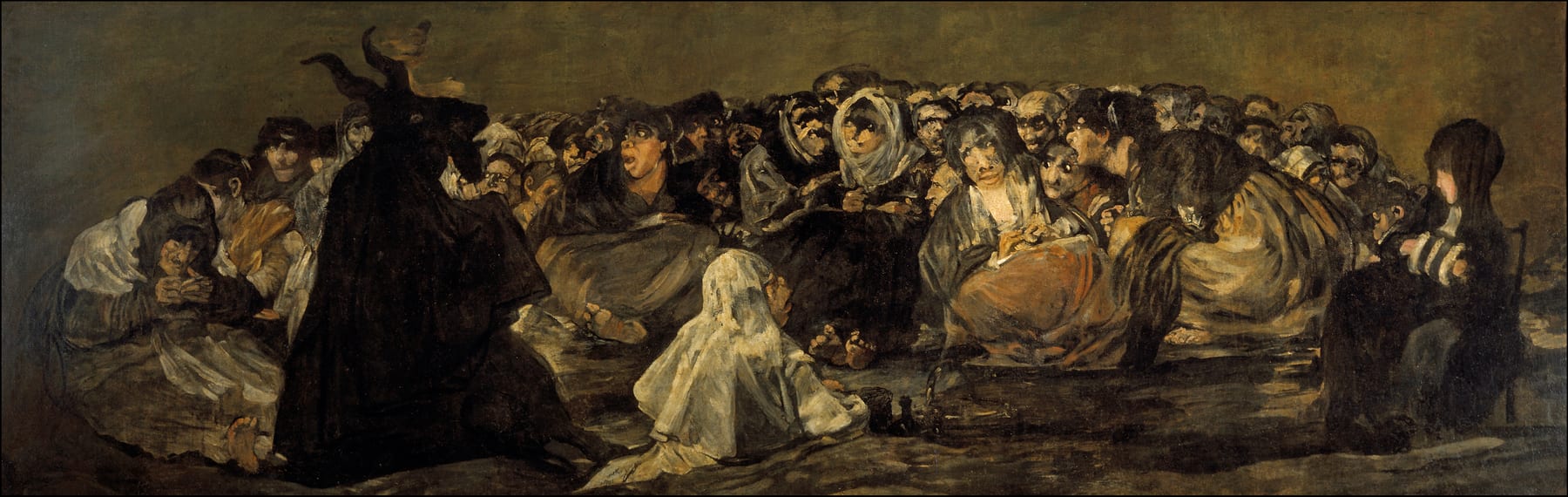
Witches’ Sabbath, Francisco de Goya, 1821–1823, oil on plaster wall (transferred to canvas), dimensions: 140.5 × 435.7 cm (56 × 172 in), Museo del Prado, Madrid.
日本におけるハロウィンの人気は2000年代に、東京ディズニーランドやユニバーサル・スタジオ・ジャパンなどの著名なテーマパークを通じて爆発的に広まりました。それ以来、お祭りは拡大し、色とりどりの野外パーティーが開催され、さまざまなコスチュームが大都市の通りを練り歩いています。しかし、2023年以降、渋谷や新宿などの東京の特定の地域では安全上の理由から街頭イベントが制限されています。クリエイティブにハロウィンを祝いたい方、友達と安全で楽しい環境で乾杯したい方は、ぜひArtbar Tokyoにお越しください!
The popularity of Halloween in Japan exploded in the 2000s through renowned theme parks, such as Tokyo Disney and Universal Studios Japan. Since then, celebrations have expanded, featuring colorful outdoor parties where costumes of all kinds parade through the streets of major cities. However, since 2023 there have been restrictions in certain areas of Tokyo, such as Shibuya and Shinjuku, which have reduced street events for safety reasons. If you want to celebrate Halloween creatively and raise a toast with your friends in a safe and fun environment, join us at Artbar Tokyo!
現代のハロウィンは比較的新しい祝いですが、死、精神性、そして来世を象徴する概念ははるかに古いものです。何世紀にもわたり、さまざまな繰り返されるテーマや芸術形式がこれらのトピックを探求してきました。たとえば、中世のヨーロッパでは、「死の勝利」や「死の舞踏」などの不気味な表現が制作され、命ある世界と死者の世界との出会いを描くことを意図していました。そこで、死は常に優位に立っていました。これらの作品は、ラテン語で「死ななければならないことを忘れるな」という意味のメメント・モリ(Memento Mori)として機能し、私たち全員が死に直面する運命にあることを思い起こさせるものでした。この概念は、日本文学に由来する「もののあわれ」という有名な日本の考え方を思い起こさせます。これは儚さと無常を示し、すべての人が死ぬ運命にあり、すべてのものには終わりがあることを思い出させます。
While modern Halloween is a relatively recent celebration, the concepts of death, spirituality and the afterlife it embodies are much more ancient. Throughout the centuries, various recurring themes and artistic forms have explored these topics. For instance, during the Middle Ages in Europe, macabre representations such as “The Triumph of Death” and “The Dance of Death,” were produced, intended to depict the encounter between the world of the living and the dead, where death always prevailed. These artworks served as a Memento Mori (from Latin, meaning “remember you must die”), a reminder that we are all destined to face death no matter what. This concept might recall the famous Japanese notion of Mono No Aware, an expression originated from Japanese literature that denotes transience and impermanence, reminding us that everyone is fated to die and all things come to an end.
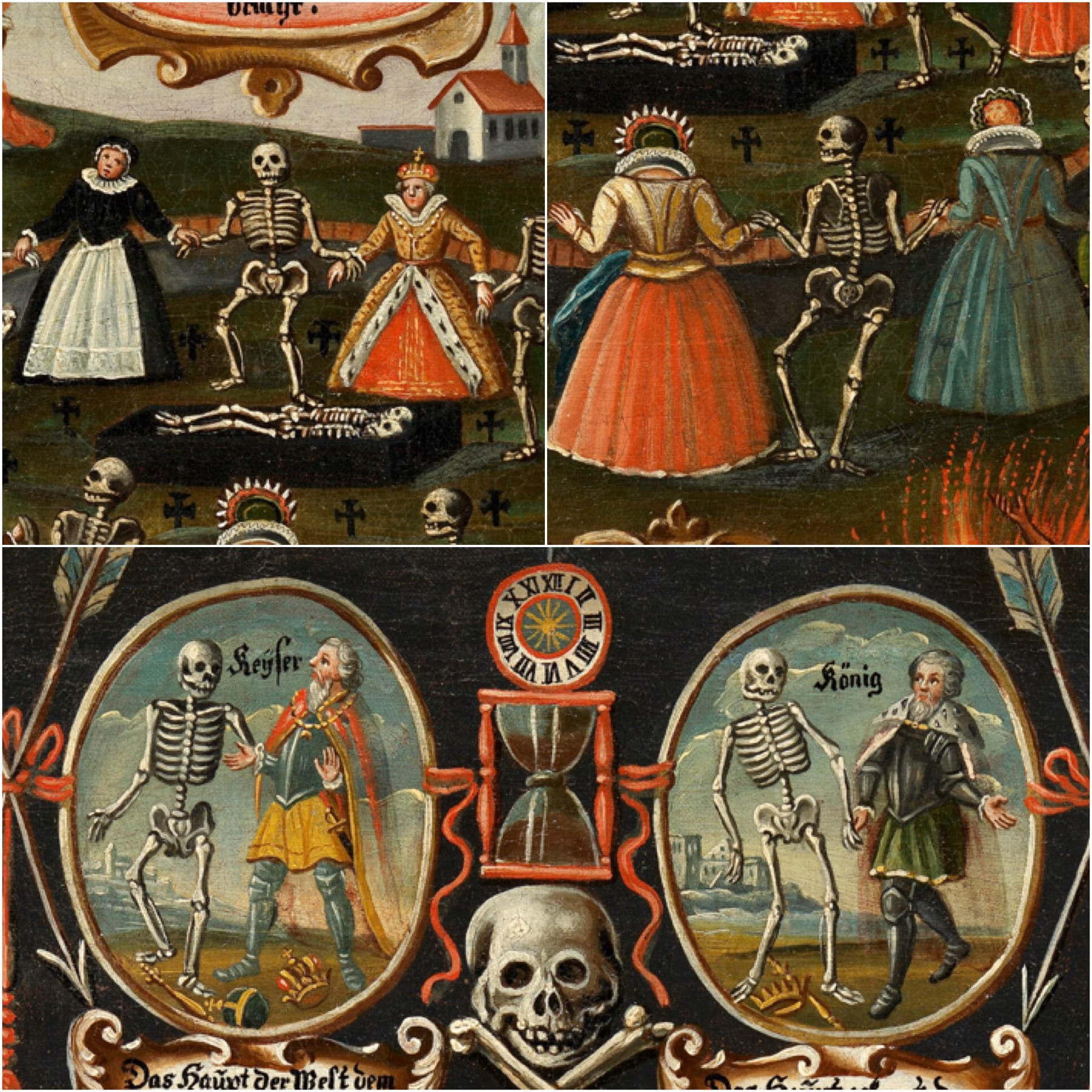
A detail from an 18th-century oil painting depiction of the Dance of Death, 72 x 55 cm, Wellcome collection, London
多くの現代アーティストもまた、より暗く不安を引き起こすテーマに取り組んでいます。注目すべき例として、ヘンリック・フュッスリが挙げられます。彼は夢のようなロマンチックな雰囲気の中で、悪夢のようなシーンや暴力的なイメージを描きました。もう一人の象徴的なアーティストはフランシスコ・ゴヤで、彼の鋭くグロテスクなスタイルは、数多くの魔女狩りや残酷な行為を描写しました。
Many modern artists have also delved into darker and more unsettling themes. A remarkable example is Heinrich Füssli, who illustrated nightmarish scenes and violent imagery with a oneiric and romantic atmosphere. Another emblematic artist is Francisco Goya, whose incisive and grotesque style portrayed numerous acts of witchcraft and cruelty.
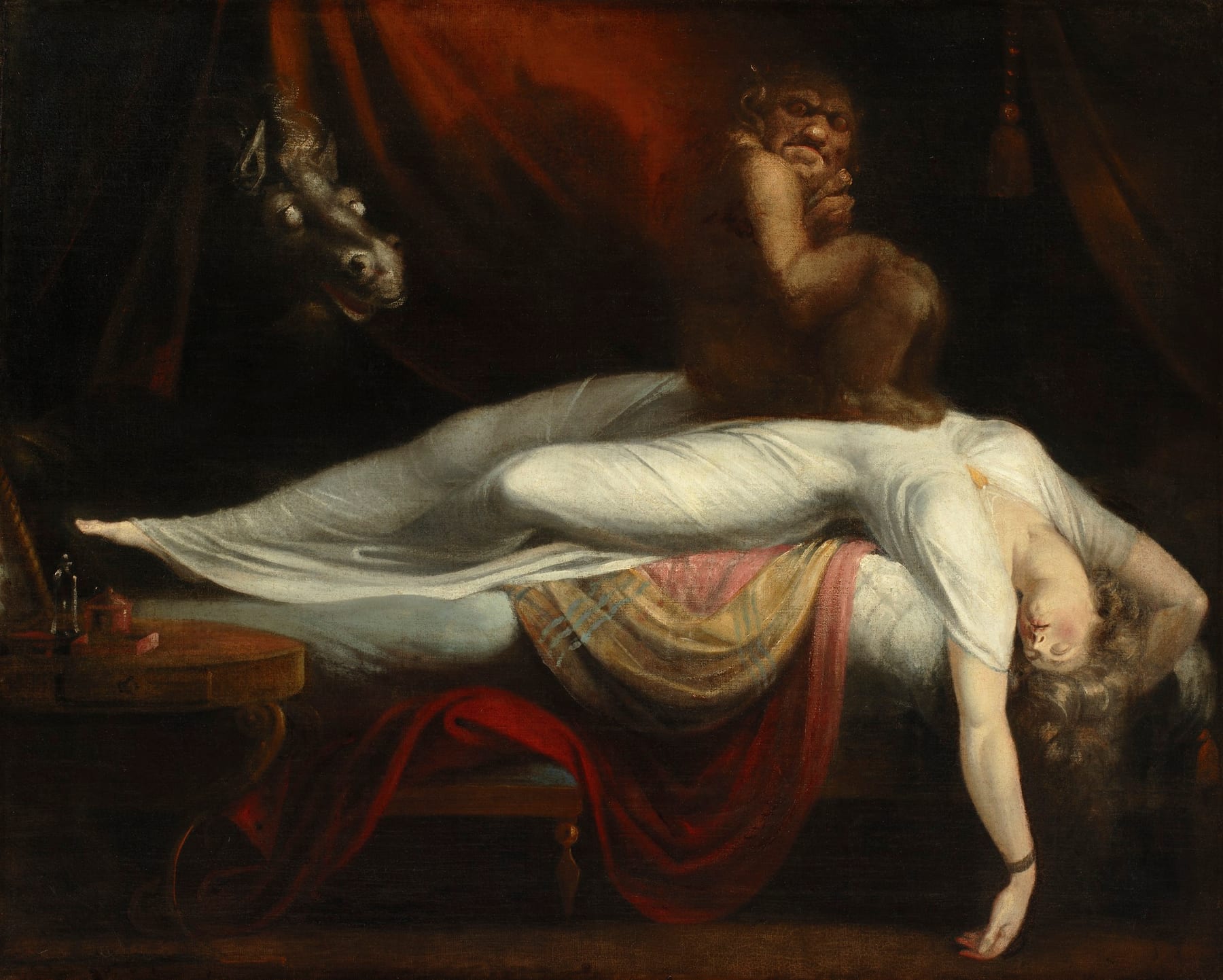
The Nightmare, Heinrich Füssli (or Henry Fuseli), 1781, oil on canvas, dimensions: 101.6 cm × 127.6 cm, Detroit Institute of Arts
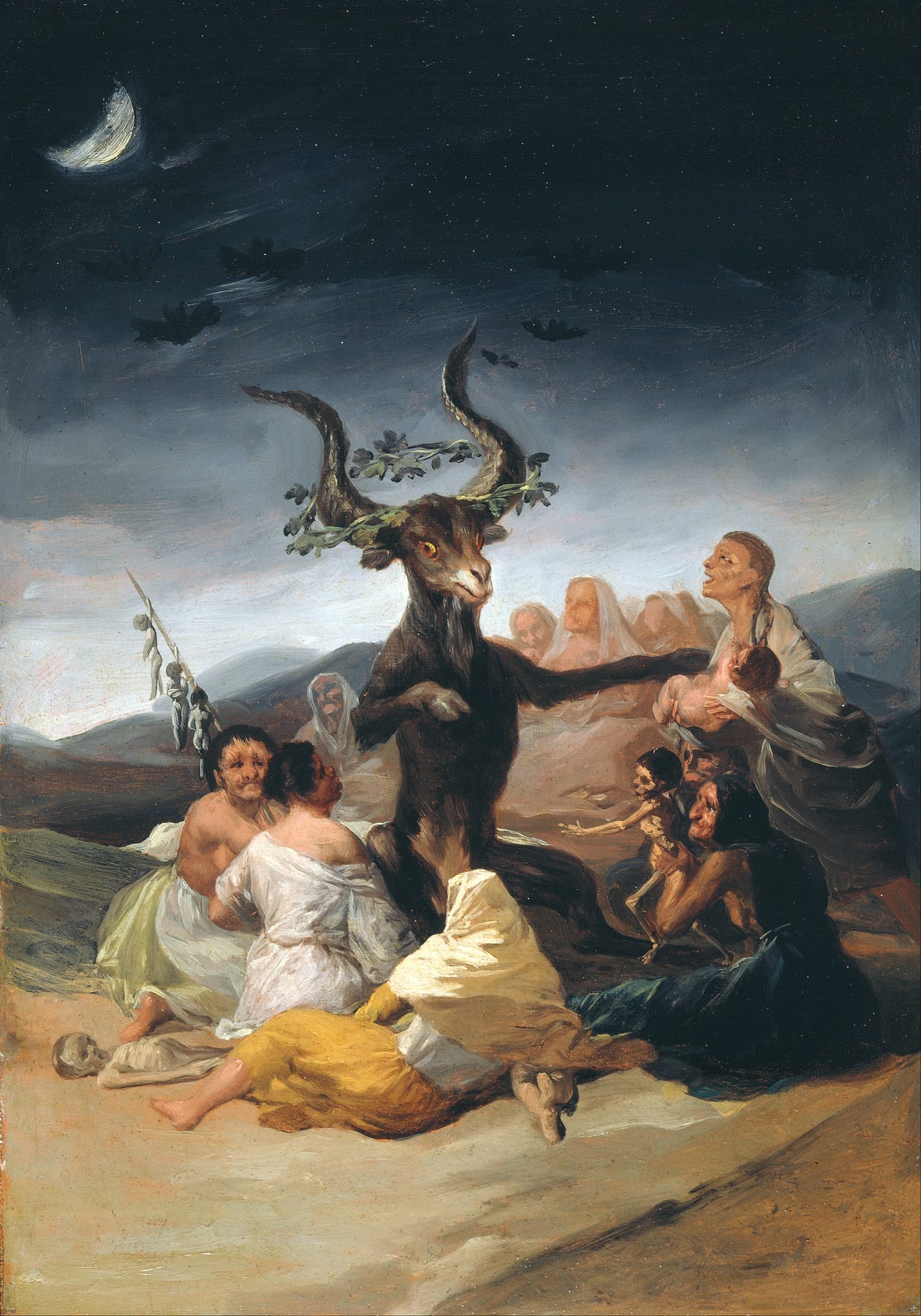
Witches’ Sabbath (The Great He-Goat), Francisco de Goya, 1789, oil on canvas, dimensions: 121 cm × 280 cm, Prado Museum, Madrid.
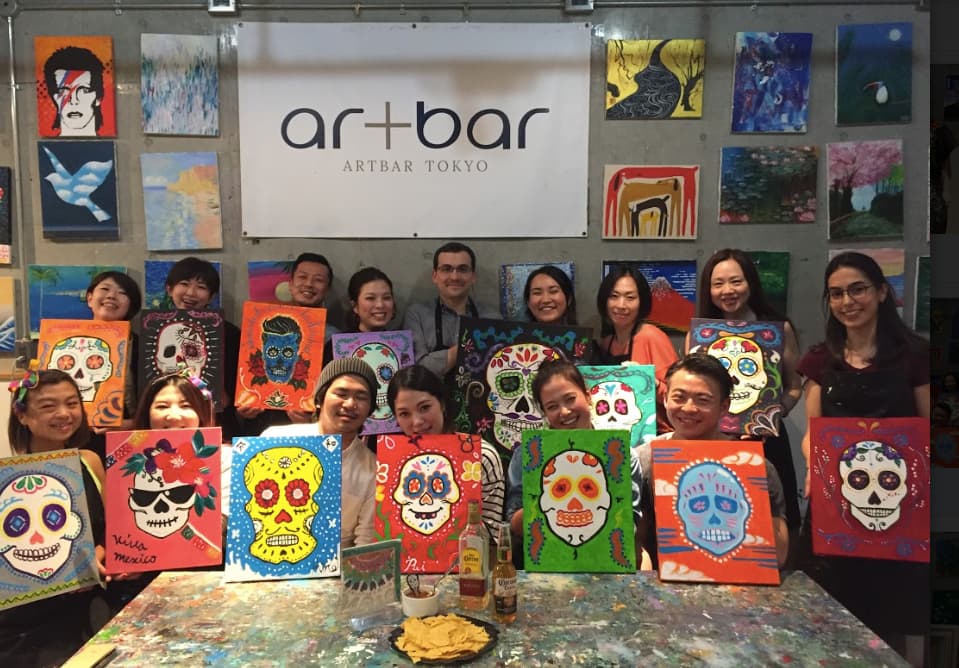
興味深いことに、非常に人気のあるアーティストの中にも、より不気味な作品があまり知られていないものがあります。たとえば、著名なポスト印象派のアーティストであるフィンセント・ファン・ゴッホは、初期のキャリアで「燃えるタバコをくわえた骸骨」を描きました。同様に、メキシコのアーティストフリーダ・カーロも死をテーマにし、象徴やより明示的な表現を用いました。メキシコのポップカルチャーにおいて、死は根本的な要素であり、有名な死者の日(Día de los Muertos)に見られます。このメキシコの祝日は、亡くなった人を敬うための色とりどりの祭りが特徴で、ハロウィン特有の陰鬱で不気味な雰囲気とは対照的に、楽しく活気に満ちた雰囲気を持っています。死者の日には、人々が頭蓋骨にインスパイアされた顔をペイントし、亡くなった人の魂に食べ物や色とりどりの花を捧げます。私たちアートバーでは、喜びをもって祝うことが大好きなので、死者の日をテーマにしたクラスも開催します!
Interestingly, there are also extremely popular artists whose more macabre works are not particularly well known. For instance, the renowned post-impressionist artist Vincent Van Gogh painted “Skull of a Skeleton with Burning Cigarette” in his early career. Similarly, the Mexican artist Frida Kahlo addressed the theme of death, employing both symbolism and more explicit representations. In Mexican popular culture, death is a fundamental element, as we see in the famous Día de los Muertos (Day of the Dead). This Mexican holiday is characterized by vibrant festivities to honor the deceased, which carries a joyful and lively atmosphere that contrasts with the gloomy and spooky vibe typical of Halloween. During Día de los Muertos, people paint their faces inspired by skulls and offer food and colorful flowers to the souls of the departed. Here at Artbar Tokyo, where we love to celebrate with joy, we will also celebrate Día de los Muertos with a themed class!
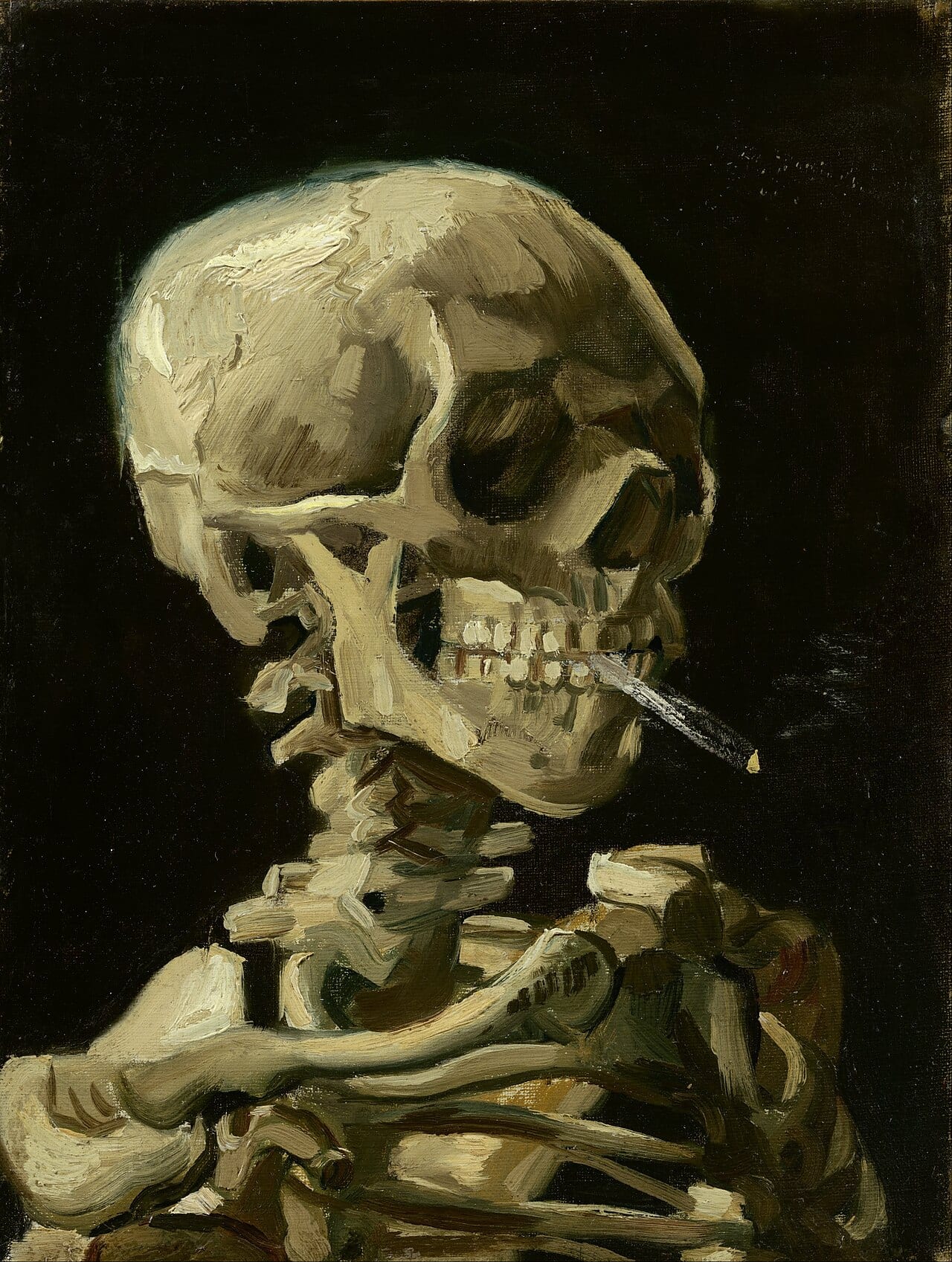
Skeleton with Burning Cigarette, Vincent van Gogh, 1886, oil on canvas, dimensions: 60.3 cm × 50.2 cm, private collection. From 4 October 2024 until 26 January 2025 this painting is on view in the exhibition “Gothic Modern: From Darkness to Light” at the Atheneum Art Museum, Helsinki, Finland.
日本の芸術の歴史においても、死、霊、そして来世を想起させる恐ろしいシンボルが豊富に存在します。この伝統は、幽霊(ゆうれい)や妖怪(ようかい)の図像学に特に顕著であり、浮世絵(うきよえ)に頻繁に描かれています。「歌川国芳の骸骨に立ち向かう光国」や「北斎の皿屋敷」などのアイコニックな傑作は、死をテーマにした恐ろしいシンボルが民間伝承の一部であり、日本の美術史で表現されている素晴らしい例です。
Even in the history of Japanese art, there is an abundance of frightening symbols that evoke themes of death, spirits, and the afterlife. This tradition is particularly evident in the iconography of yūrei (ghosts) and yōkai (supernatural creatures), which are frequently depicted in Ukiyo-e (woodblock prints). Iconic masterpieces such as “Mitsukuni Defying the Skeleton” by Utagawa Kuniyoshi and “Sarayashiki” by Hokusai are great examples of how deadly and scary symbols are part of folklore and are represented in Japanese art history.
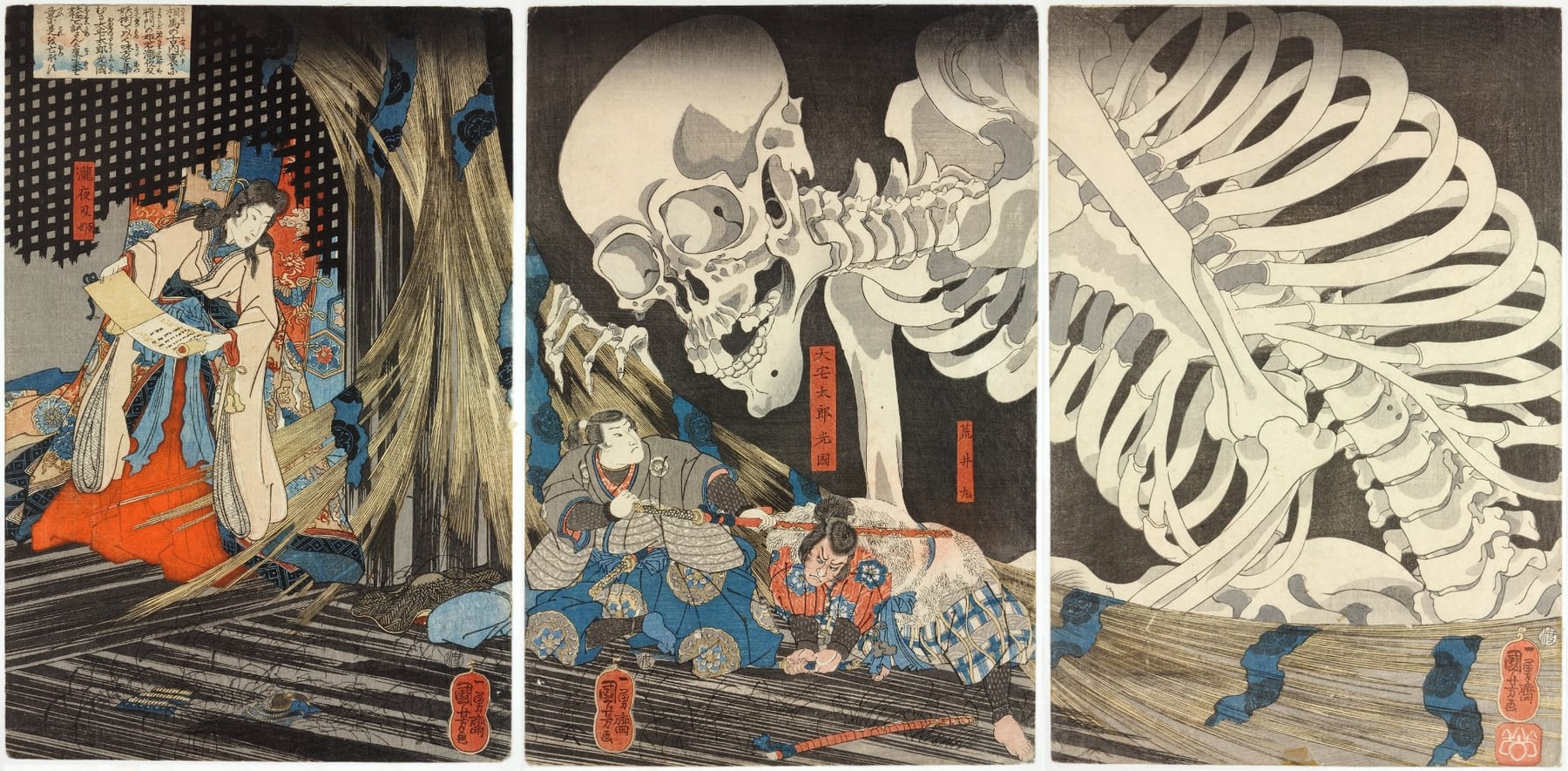
Mitsukuni Defying the Skeleton Ghost, Utagawa Kuniyoshi, 1850, woodblock print, dimensions: 36.5 cm × 25.2 cm, private collection.
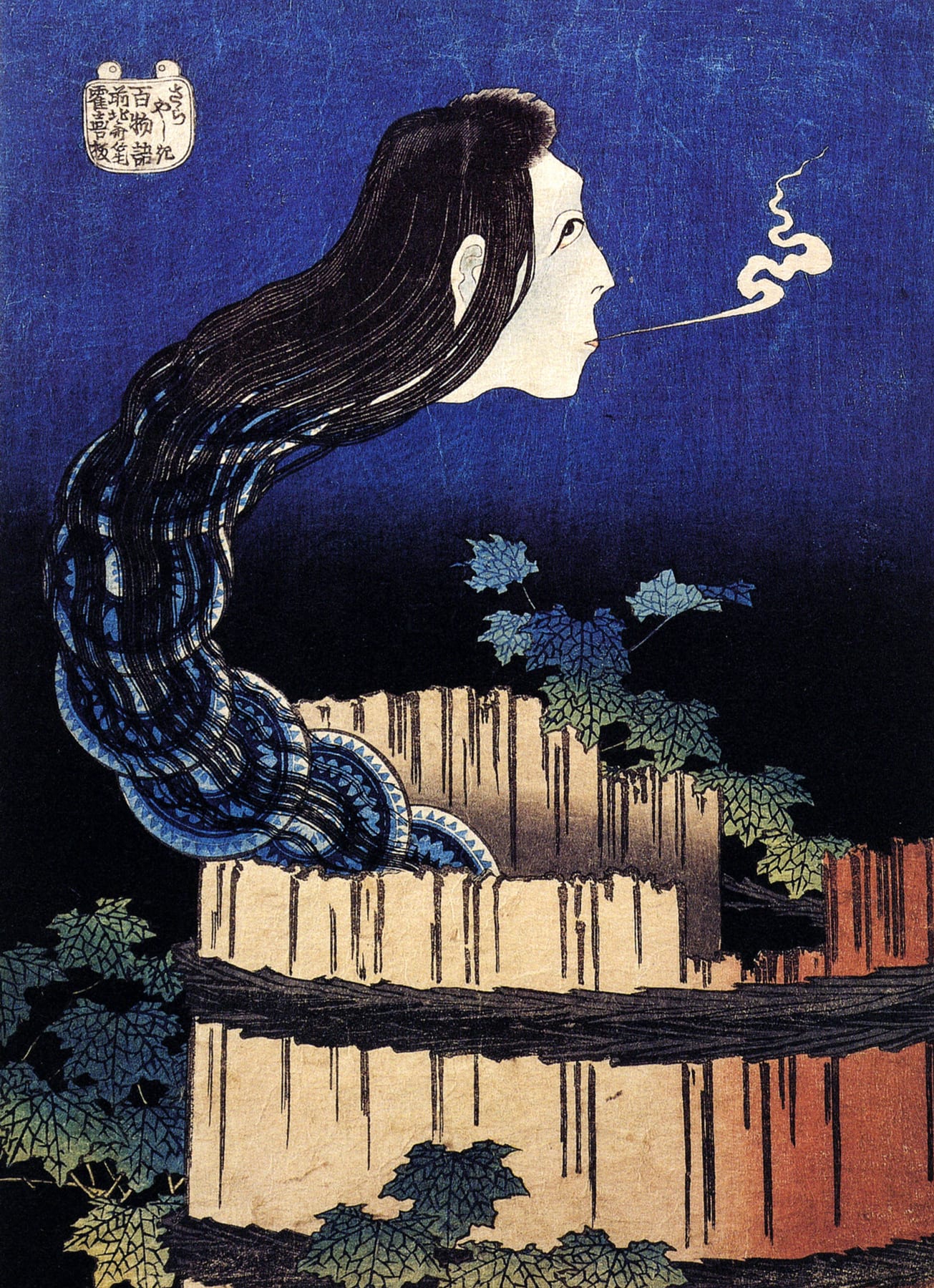
Sarayashiki (The House of Broken Plates), Katsushika Hokusai, 1835, woodblock print, dimensions: 25.7 cm × 37.8 cm, private collection.
このハロウィンシーズンに関連する陰鬱で魅力的なアート作品を描く意外な多様なアーティストを見てきましたが、私たちが実際に会うのを楽しみにしている現代のアーティストもいます。そう、あなたのことを話しているのです!神秘的な風景を描きたいのか、死者の日のスタイルで明るいポートレートを描きたいのか、Artbar Tokyoで一緒にスプーキーなシーズンを祝うのを楽しみにしています!
We’ve seen several unexpected and diverse artists portraying gloomy and fascinating art pieces related to this Halloween season, but there are contemporary artists we can’t wait to meet in person: Yes, we’re talking about you! No matter whether you want to paint a mysterious landscape or a cheerful portrait in the style of Día de los Muertos, we look forward to seeing you at Artbar Tokyo to celebrate the spooky season together!